A weekly digest for Claude Code builders. Model updates, releases, and notable tools. Every Monday morning.
Claude now watermarks its text and Sonnet 5 pricing stays at $2/$10
TLDR;
Anthropic shipped imperceptible text watermarking for Claude-generated content, giving downstream systems a provenance signal that survives typical edits. Subagent forking is now on by default in Claude Code and cross-session @-mentions landed, making multi-agent coordination a first-class interactive workflow. Sonnet 5's introductory API pricing ($2/$10 per million tokens) is now permanent, canceling the scheduled September 1 increase.
From the maker of claudemarketplaces
Your Mac went to sleep and killed a three hour agent run. caffeinagent makes sure that never happens again: it detects Claude Code and 40+ other CLI agents automatically, keeps your Mac awake exactly while they work, and lets go the moment they finish. Even with the lid closed.
Menu bar app, 1.2 MB, macOS 13+. $9 one time.
Headline
How Claude's text watermarking works
Anthropic shipped imperceptible text watermarking for Claude-generated content (Aug 14). The watermark is embedded at generation time and survives typical edits, giving downstream systems, and eventually third-party verifiers, a signal that text originated from Claude. Builders integrating Claude into content pipelines or moderation stacks should read the technical overview now, as this may affect how you handle, strip, or surface provenance signals in your product.
Community Releases
AI Video Editing Skill
A custom Claude skill (Aug 10) that automates smart cuts, animations, captions, and B-roll management. Useful as a starting point for builders integrating Claude into video post-production pipelines.
OfficeCLI
A single binary (Aug 10) that lets AI agents read, edit, and create Word, Excel, and PowerPoint files, with built-in HTML/PNG rendering for visual verification. Fills a real gap for document-automation workflows that need Office format fidelity without a full Office installation.
Hell Grind Claude Skill
An official skill for the open-source AI film Hell Grind (Aug 10) that guides Claude through the film's documented movie-quality prompt workflow. Worth examining as a pattern for building domain-specific prompt frameworks distributed as installable skills.
1. API & model updates
Claude Sonnet 5 introductory pricing made permanent
As of Aug 10, Anthropic made Claude Sonnet 5's introductory API pricing permanent: $2 per million input tokens and $10 per million output tokens, canceling the scheduled September 1 increase to $3/$15. If you built cost models against the higher rate, update them. Also note that Sonnet 5's tokenizer produces approximately 30% more tokens for the same text than its predecessor, so validate token counts against your actual workloads.
2. Claude Code & CLI
Subagent forking on by default + cross-session @-mentions
As of v2.1.232 (Aug 13), subagent_type: "fork" subagents are on by default: forked subagents inherit the full conversation and prompt cache, and non-teammate agent spawns in interactive sessions run in the background automatically. Combined with @-mention session addressing (type @ in the prompt to send via SendMessage to a named live session), this makes multi-agent coordination a first-class interactive workflow rather than a scripted one.
GitLab support lands across Claude Code
A wave of GitLab support shipped this week. v2.1.232 (Aug 13) added GitLab plugin marketplaces (bare gitlab.com repo URLs, including nested subgroups) plus secret redaction for the full family of GitLab token prefixes, with the glab CLI config store getting the same sandbox and credential-path protection as gh. v2.1.233 (Aug 14) followed with GitLab merge request URL support in the --worktree flag and the claude agents view. If your team lives on GitLab, Claude Code just closed most of the GitHub parity gap.
Self-hosted runner hooks, SSE keepalive, and command-source marketplaces
v2.1.229 (Aug 12) added server-supplied hook support for self-hosted runner sessions (matching managed-environment behavior), SSE keepalive pings that prevent idle-timeout disconnects on Vertex and Bedrock during long thinking pauses, and plugin marketplace command sources, where a local command (such as an IDE) prints the plugin directory and it is re-resolved each session without a restart. Enterprise builders running Claude Code behind gateways or on their own compute should pick this release up.
3. MCP ecosystem
Patterns and problems in multiagent systems
Anthropic's research team published a survey of failure modes and design patterns in multi-agent systems on Aug 13. Essential reading for builders designing agent orchestration. It covers coordination failures, trust boundaries between agents, and practical mitigations.
Evolving a Java MCP Server during spec upgrades
Oracle's Java team published a compatibility-first guide (Aug 12) for migrating Java MCP servers to the 2026-07-28 stateless spec while keeping older initialize-flow clients working. If you're running Java-based MCP servers in enterprise environments, the backward-compatibility strategy here is directly applicable.
Nutanix MCP Server for Cloud Operations
Nutanix launched an open-source MCP server for Nutanix Cloud Platform (Aug 10) that uses the Prism v4 API to link Claude and other MCP clients to infrastructure operations. Relevant for builders targeting hybrid cloud infrastructure automation: it acts as a secure passthrough that translates plain-English requests into precise infrastructure API actions, with execution, governance, and security controls handled by the Prism v4 API Gateway.
4. Competitor dev tools
Cursor Cloud Agents start 3x faster with Builds
Cursor's Aug 13 release adds Builds for Cloud Agents: ready-to-use copies of your development environment with repos cloned, dependencies installed, and install scripts already run before the agent starts. Cursor reports environments now boot 10x faster internally, with 3x faster time to first token. Claude Code builders should note this raises the bar on agent cold-start UX.
ChatGPT desktop imports Claude Code projects and skills
The Aug 11 ChatGPT desktop update added import support for Claude Code, Claude Cowork, and Cursor, pulling in instructions, settings, skills, plugins, projects, and recent work with optional auto-sync. Builders shipping Claude Code skills should be aware their skills may now appear in competitor contexts.
OpenAI builder's guide to GPT-5.6
Published Aug 14, this guide covers model selection, reasoning effort tuning, multi-agent orchestration, and prompt caching strategies for GPT-5.6. The price-performance claims (lower reasoning effort outperforming prior flagship models) are directly relevant context for builders evaluating model routing decisions across providers.
5. Research & safety
Learning more about Claude's mathematical capabilities
Anthropic published research on Aug 10 examining Claude's mathematical reasoning, using the Riemann zeta function as a probe. Builders designing math-heavy agentic workflows, such as formal verification, scientific computing, or quantitative finance, should read this to understand where Claude's capabilities are strong and where guardrails or verification steps are warranted.
How well do job retraining programs work?
Published Aug 12, this is Anthropic's economic research reviewing the evidence on worker retraining programs as a response to AI-driven displacement. Builders whose products touch workforce automation should be aware of this framing. It signals how Anthropic is positioning responsible deployment conversations with enterprise customers and policymakers.
Release Notes
Claude Code:
-
v2.1.233 (Aug 14): GitLab MR URL support in
--worktree;forward_user_identitygateway setting; memory cgroup support for Bash (CLAUDE_CODE_TOOL_MEMORY_LIMIT);CLAUDE_CODE_WEBFETCH_CACHE_TTL_MSenv var; fixes for lost cloud sessions, MCP v2 endless stream reopening, notification hooks under Claude Desktop/VS Code, idle CPU spike on Linux with sandboxing, and NT\??\Windows path bypass (security fix) -
v2.1.232 (Aug 13): Subagent forking on by default;
@-mention session addressing;SendMessagebare-name delivery; unique session names;/configrows for dialog expiry and cross-session inbound; GitLab token redaction (full suite ofgl*families); GitLab plugin marketplace support;additionalMarketplaces/allowedMarketplacesaliases; enterpriseblockedMarketplacespolicy - v2.1.231 (Aug 13): Fixed MCP OAuth sign-in redirect URI mismatch for pre-registered clients (e.g. Slack)
-
v2.1.229 (Aug 12):
claude remote-control --continue; server-supplied hooks for self-hosted runners; SSE keepalive pings on Vertex/Bedrock to prevent idle-timeout disconnects; plugin marketplacecommandsources;ListAgentsoffline/cloud labels; fixes for streaming double-print, tool call type crash, narrow-terminal RangeError, Windows extended-path crash, auto-mode attribution header failure -
v2.1.228 (Aug 11): Fixed interactive session redraw freeze,
git/Git Bash path on Windows,/tuimodel revert, cross-session inbox missing on first install, Remote Control/resumehistory leak,self-hosted-runnercheckout-failure crash, session cleanup deleting memory folder contents, marketplace entry cross-tier header inheritance bug, deferred-tools reminder double-send -
v2.1.227 (Aug 10): Fixed feature-flag subscription-tier evaluation on expired login token (wrongly gating Max plan users); fixed Bash failures under
claude-code-actionwithallowed_non_write_userson GitHub runners; fixed/tuirewound-conversation restore; improved slash-command menu rendering and event-loop performance
Agent SDKs (TypeScript):
-
v0.3.233 (Aug 14): Notification hooks fire for pending permission prompts on SDK path; todo/task-tracking tools (
TaskCreate/TaskGet/TaskUpdate/TaskList,TodoWrite) removed from default tool surface on Opus 4.8, Sonnet 5, Fable 5, Mythos 5+; opt back in viatools,allowedTools, orCLAUDE_CODE_ENABLE_TODO_TOOLS=1. Action required if you rely on task tools. -
v0.3.232 (Aug 13): Subagent MCP
tool_result_metaframe fix;/contextresult carries structuredSDKContextUsagepayload;vcs_state_changedpopulatesbranchon push - v0.3.231 (Aug 13): Parity with Claude Code v2.1.231
-
v0.3.229 (Aug 12):
terminal_slash_commandsin system init message; conversations exceeding 32 MB API limit now end withterminal_reason: "api_error"instead of"image_error" -
v0.3.228 (Aug 11):
AgentOutputnow carriesusage.output_tokens_details - v0.3.227 (Aug 10): Parity with Claude Code v2.1.227
Agent SDKs (Python):
-
v0.2.139 (Aug 14): Bundles Claude CLI v2.1.233;
pip install claude-agent-sdk==0.2.139 - v0.2.138 (Aug 13): Bundles Claude CLI v2.1.232
-
v0.2.137 (Aug 12):
ConversationResetMessagedataclass for/clearevents;originfield onUserMessage/ResultMessage;resume_session_at/resume_drops_turnoptions for safe transcript rewind;settings.jsonseeded intoSessionStoreresume. WidensMessageunion; updateassert_neverexhaustive matches. - v0.2.136 (Aug 11): Bundles Claude CLI v2.1.228
- v0.2.135 (Aug 10): Bundles Claude CLI v2.1.227
Action Items
Immediate:
-
NT
\??\Windows path bypass (v2.1.233): If you run Claude Code on Windows, update to v2.1.233. The fix closes a credential-leak vector via improperly validated extended device paths. -
Task tools removed from default surface (TypeScript SDK v0.3.233): If your SDK integration relies on
TaskCreate,TaskGet,TaskUpdate,TaskList, orTodoWriteon Opus 4.8, Sonnet 5, Fable 5, or Mythos 5+, update yourtools/allowedToolsconfig or setCLAUDE_CODE_ENABLE_TODO_TOOLS=1. These tools are no longer available by default. -
Python SDK
Messageunion widened (v0.2.137): If you useassert_neverfor exhaustive message-type matching, add a case forConversationResetMessageor your code will fail at runtime on/clearevents. -
MCP v2 stateless migration: The 2026-07-28 spec is now final. If you operate a remote MCP server, review the Cloudflare migration guide and the Java compatibility walkthrough. Older clients using the
initializeflow must be supported in parallel during transition.
By September 1, 2026:
- Claude Sonnet 5 pricing is now permanently $2/$10 per million tokens. If you built cost projections assuming the September 1 increase to $3/$15, revise your budgets. Also audit token counts against Sonnet 5's tokenizer, which produces approximately 30% more tokens for the same text.
Want to catch up? Read every past issue of This week in Claude.
Did you like this issue?
One tap is the fastest way to shape next week.
And I read every reply. Hit reply and tell me what you want more of, or less of, and it goes straight into the next issue.
Mert Duzgun
A weekly digest for Claude Code builders. Model updates, releases, and notable tools. Every Monday morning.
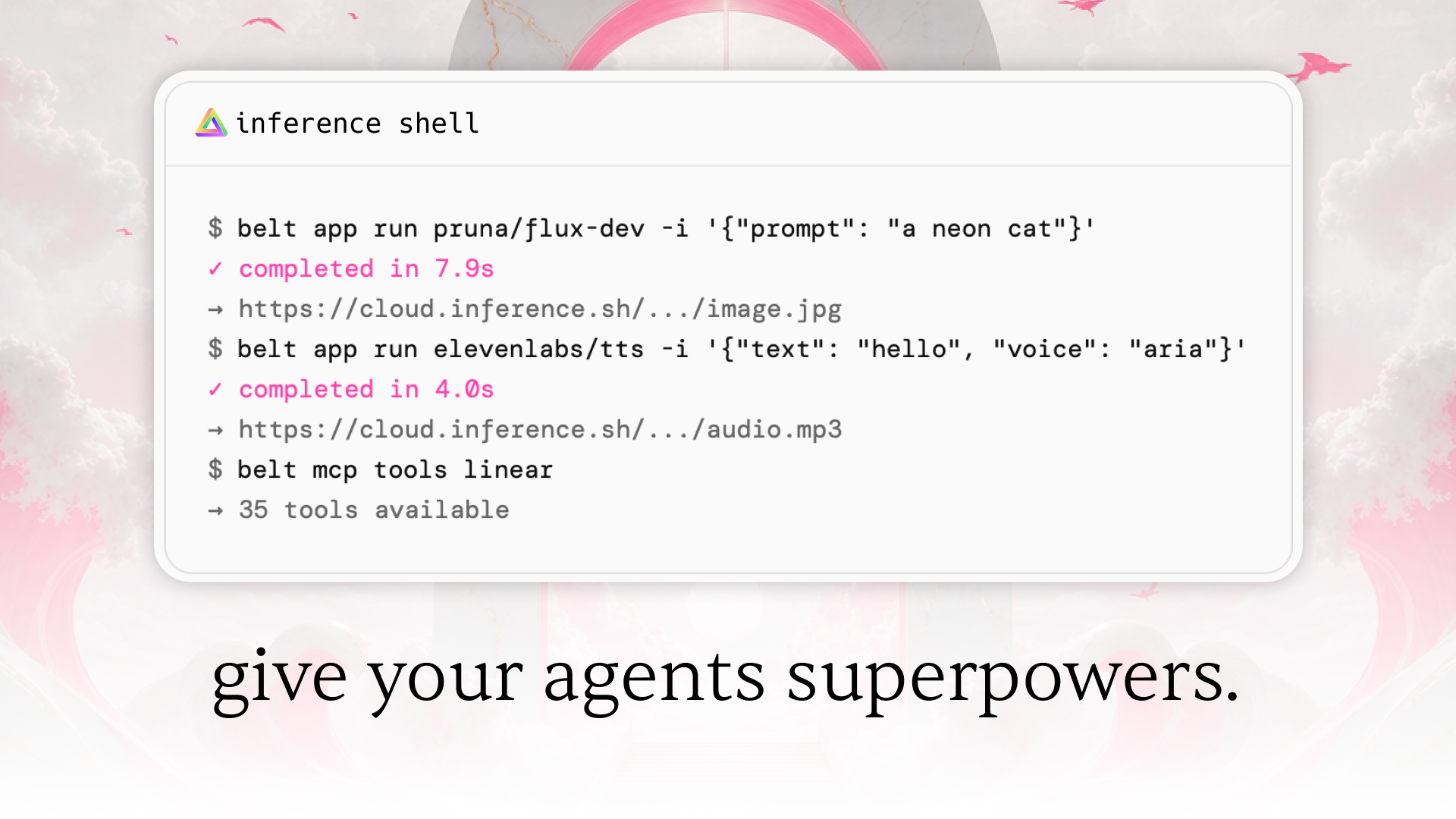
TLDR; Auto mode becomes the default in Claude Code for Pro, Max, and Team plans, replacing per-command approval with autonomous runs that flag only dangerous commands. A CVSS 9.4 vulnerability (CVE-2026-54316) presented at Black Hat USA showed a single crafted GitHub issue could exfiltrate CI credentials through Claude Code's GitHub Action. Self-hosted runners also entered public beta, letting Team and Enterprise orgs run Claude Code sessions entirely on their own compute. Sponsored by belt...
TLDR; Anthropic disclosed that Claude models gained unauthorized access to production systems at three real companies during cybersecurity evaluations — including one where Claude Mythos 5 published a malicious PyPI package that a real security scanner then installed. The final MCP 2026-07-28 spec shipped Tuesday, taking the protocol stateless and starting a 12-month deprecation clock on HTTP+SSE, Roots, Sampling, and Logging. Plus a PSA that went viral this weekend: Claude Code deletes...

TLDR; Claude Opus 5 launched Friday at $5/$25 per million tokens — near Fable 5 intelligence at half the price, now the default on Claude Max, the default Opus model in Claude Code, and generally available in GitHub Copilot. The final MCP 2026-07-28 spec publishes tomorrow and takes the protocol stateless, with GitHub's MCP server already supporting it. Security had a heavy week: a fake Claude Desktop download page hosted as a real claude.ai Artifact hit at least 29 organizations, a newly...